What “new” usually means
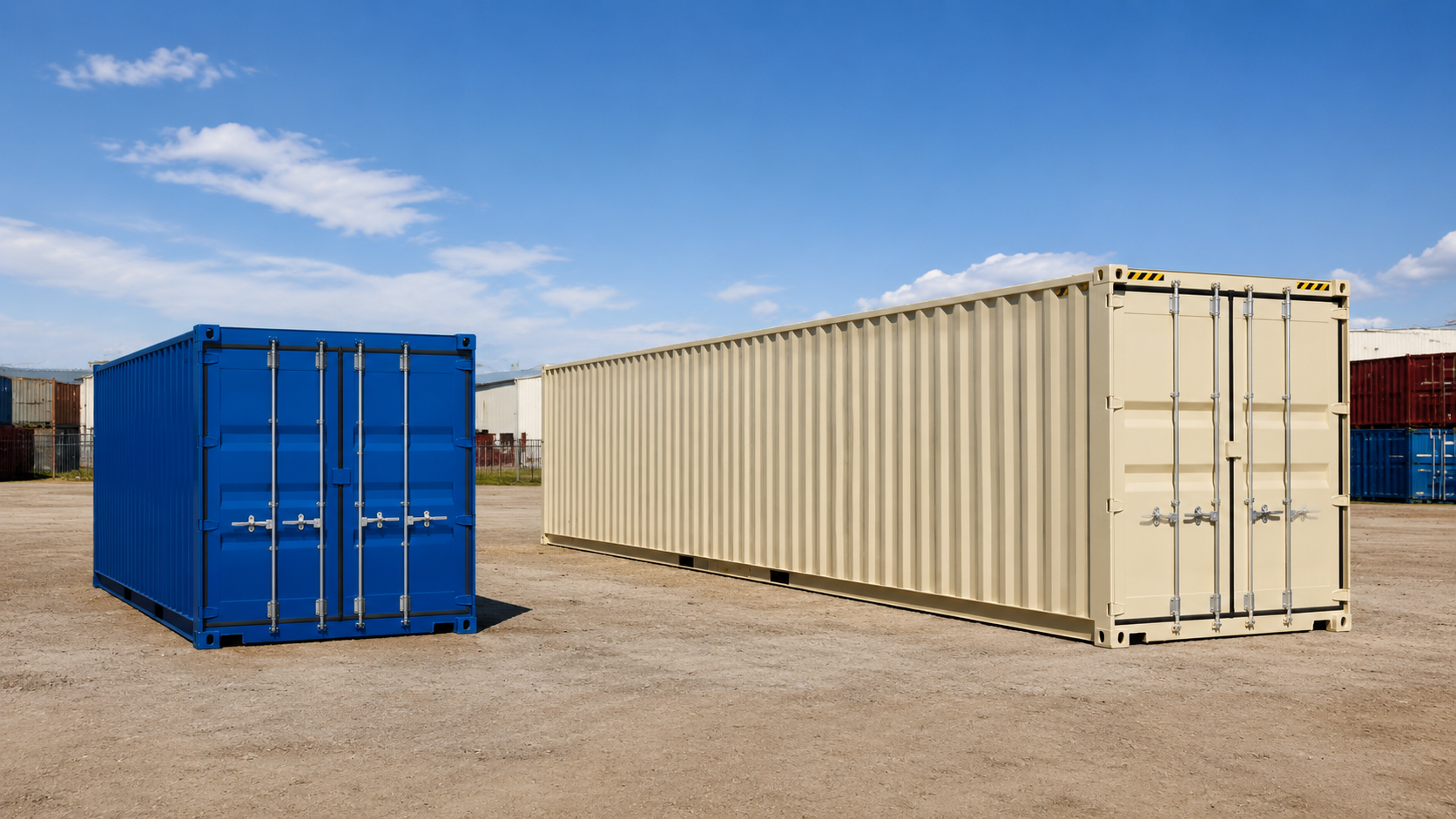
Most retail “new” containers are one-trip units: manufactured overseas, loaded once and moved through the shipping network before sale. They normally offer cleaner paint, fewer dents, newer seals and a more consistent interior than an older fleet unit.
- Strong cosmetic appearance
- Minimal prior cargo use
- Good option for customer-facing or modification projects
- Usually a higher purchase price
Where used containers deliver value
Used containers may show dents, surface rust, patches, faded paint or previous shipping markings. A sound used unit can still provide secure, practical storage for farms, jobsites and commercial properties at a lower entry cost.
- Lower purchase cost
- Normal cosmetic wear should be expected
- Condition varies from unit to unit
- Exact photos and door operation matter
Compare the same facts
Evaluate both choices using the same checklist: structural condition, weather resistance, doors, floor, seals, vents, photos, yard location and delivered total. Avoid comparing a pristine one-trip unit with an unknown used listing based only on headline price.
Think about the next ten years
If you plan extensive modifications or want a polished appearance, starting with a cleaner shell may reduce preparation work. If the container will serve as straightforward storage and appearance is secondary, a properly selected used unit may produce better value.
Helpful answers before you decide
Are used containers waterproof?+
Condition varies. A wind-and-watertight description generally means the unit is intended to keep normal weather out, but customers should still review the actual condition and maintain seals, roof and drainage.
Is a one-trip container brand new?+
It is commonly described as new because it has made one cargo trip from the factory, but it has still been handled and transported and may have minor marks.